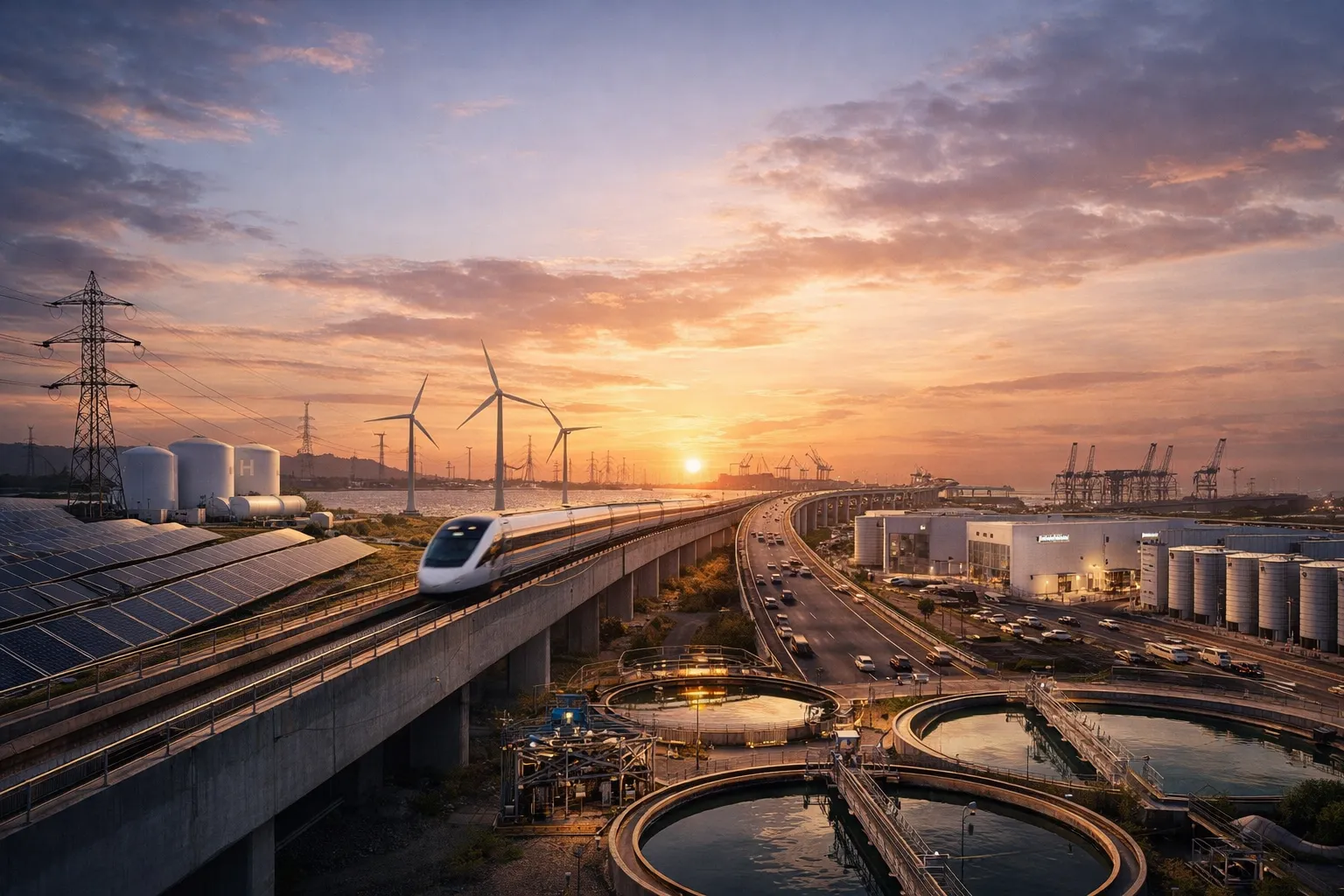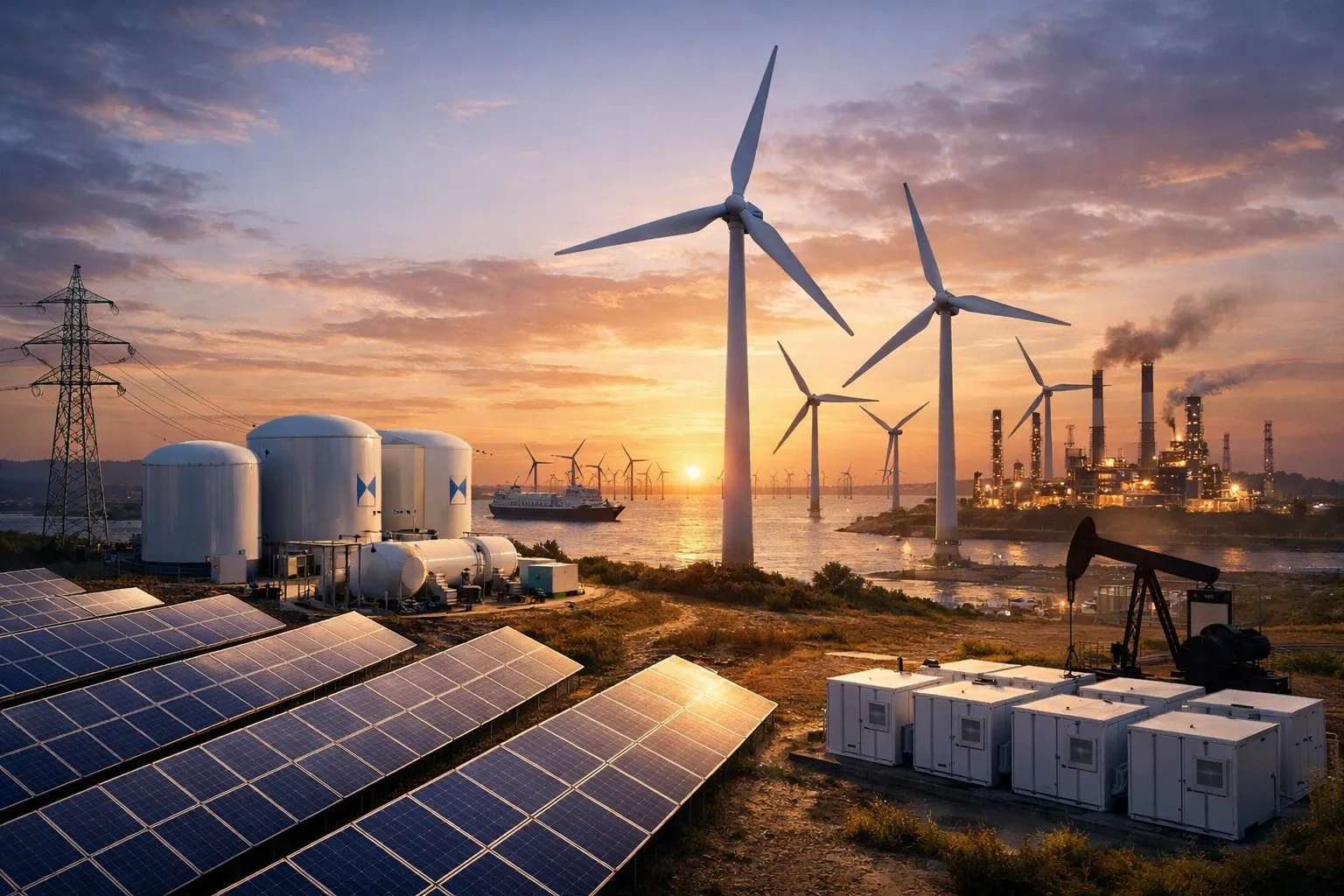




Infrastructure investment refers to funding large-scale physical systems such as energy, transportation, water, and digital networks. For investors, it offers stable, long-term returns with lower volatility, but requires high capital, long timelines, and strong execution capability. The real opportunity lies in essential assets that economies depend on daily.
What counts as infrastructure investment
Infrastructure includes the core systems that support economic activity and daily life.
Main categories:
Energy infrastructure
Power plants, transmission grids, renewable energy systems
Transport infrastructure
Highways, railways, ports, airports
Utilities and water systems
Water treatment, pipelines, waste management
Digital infrastructure
Data centers, telecom networks, fiber optics
👉 These assets are typically:
- Capital intensive
- Long-term
- Essential for national development
Why infrastructure is attractive for long-term investors
Infrastructure is considered one of the most stable investment classes.
Predictable cash flows
Many projects operate under long-term contracts or regulated pricing
Low correlation with market volatility
Infrastructure demand is relatively stable regardless of economic cycles
Inflation protection
Returns are often linked to inflation or indexed contracts
Government support
Many projects are backed or supported by public institutions
👉 For investors, infrastructure offers stability + long-term income.
Infrastructure investment models
There are several ways investors participate in infrastructure:
Direct investment
Ownership in physical assets (e.g., power plants, toll roads)
Public markets
Investment through listed infrastructure companies or funds
Private equity / funds
Participation through infrastructure-focused investment funds
Project finance
Financing specific projects with structured debt and equity
👉 The choice depends on:
- Risk appetite
- Investment horizon
- Capital availability
Public private partnerships explained
Public-Private Partnerships (PPP) are one of the most common models in infrastructure.
In a PPP:
- The government provides regulatory support or concessions
- Private investors fund, build, and operate the project
Types of PPP models include:
- BOT (Build-Operate-Transfer)
- BOO (Build-Own-Operate)
- DBFOT (Design-Build-Finance-Operate-Transfer)
👉 PPP allows:
- Governments to reduce financial burden
- Private sector to access large-scale projects
Infrastructure megaproject financing
Large infrastructure projects require complex financing structures.
Typical components:
Equity investors
Provide capital and take ownership stakes
Debt financing
Banks and financial institutions fund large portions of the project
Multilateral institutions
Organizations like development banks support large projects
Government guarantees
Reduce risk and improve bankability
👉 Key insight:
Infrastructure financing is not just about money—it is about risk allocation and structuring.
Future infrastructure investment trends
Energy transition infrastructure
Grids, storage systems, and renewable energy integration
Smart infrastructure
Digitalization of cities and utilities
Sustainable and green projects
Low-carbon infrastructure aligned with global climate goals
Emerging markets growth
High demand in regions with expanding populations and economies
👉 The future of infrastructure is integrated, digital, and sustainable.
Key risks in infrastructure investment
Regulatory and political risk
Policy changes can impact long-term project viability
Capital intensity
High upfront investment with long payback periods
Execution risk
Delays, cost overruns, and technical challenges
Demand risk
Incorrect demand forecasts can reduce returns
Currency and macroeconomic risk
Especially relevant in cross-border investments
👉 Successful investors focus on:
- Strong project structuring
- Reliable partners
- Long-term strategic planning
What this means for investors
Infrastructure is not a short-term opportunity—it is a long-duration investment strategy.
Winning investors:
- Focus on essential assets
- Understand regulatory environments
- Partner with experienced operators
- Balance risk across regions and sectors
👉 The real value lies in: owning and operating systems that economies cannot function without.
FAQ
Why do investors invest in infrastructure
Because it offers stable, long-term returns with relatively low volatility.
What is PPP in infrastructure projects
A partnership where the government and private sector collaborate to finance and operate infrastructure projects.
Are infrastructure investments stable
Generally yes, especially when backed by long-term contracts or regulated frameworks.
Which regions attract the most infrastructure investment
Emerging markets, the Middle East, and Asia are currently among the fastest-growing regions.
Strategic Insight for Investors and Industry Leaders
Infrastructure investment today requires more than capital—it requires integration between investment strategy and project execution.
Large-scale projects involve:
- Multi-layer financing structures
- Cross-border coordination
- Engineering and operational complexity
This creates a growing need for organizations that can connect:
- Capital
- Industrial capability
- Market access
International groups such as operate across energy, infrastructure, and industrial sectors, enabling a more aligned approach to large-scale project development.
For investors and partners, this provides:
- Access to diversified infrastructure opportunities
- Reduced execution risk through integrated capabilities
- Stronger alignment between investment and delivery
👉 In infrastructure, success is not just about funding projects—
it is about ensuring they are executed, operated, and scaled effectively.