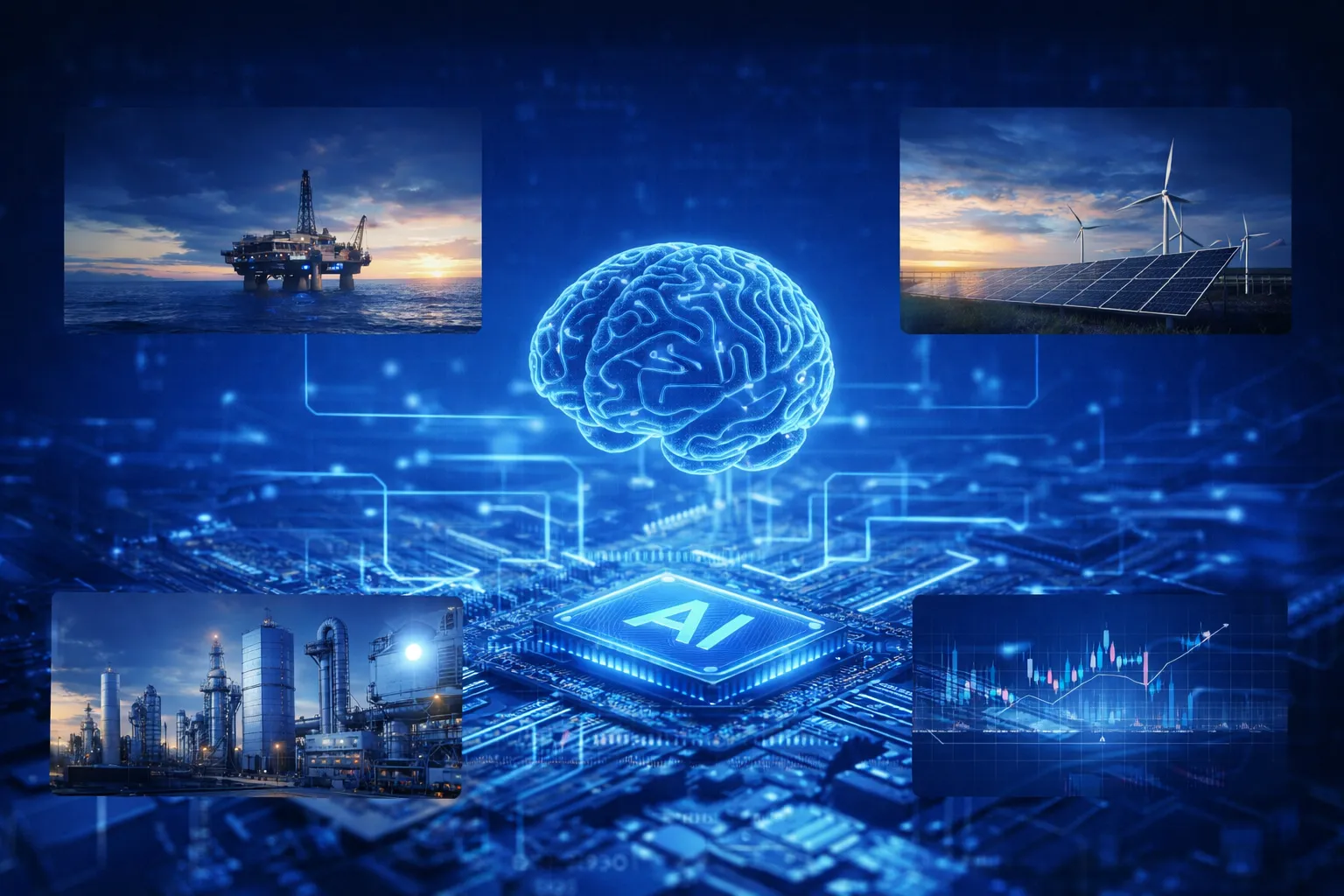




Artificial Intelligence (AI) is transforming the energy industry by improving efficiency, reducing costs, predicting failures, and optimizing energy systems in real time. From oil and gas operations to renewable energy management, AI enables faster decision-making and smarter infrastructure. For investors and industry players, the real value lies in data-driven optimization and operational scalability.
AI applications in oil and gas
AI is already widely used in traditional energy sectors.
Exploration and discovery
- AI analyzes geological data to identify potential reserves
- Reduces time and cost of exploration
Drilling optimization
- Real-time data improves drilling accuracy
- Minimizes downtime and operational risk
Production efficiency
- AI models optimize extraction processes
- Improves output while reducing waste
👉 Impact:
Lower operational costs + higher efficiency in complex environments
AI in renewable energy management
Renewable energy systems depend heavily on data and variability—making AI essential.
Solar energy optimization
- Forecasting solar generation based on weather patterns
- Adjusting panel positioning and output
Wind energy forecasting
- Predicting wind speeds and energy production
- Optimizing turbine performance
Energy balancing
- Matching supply with demand in real time
👉 AI helps renewables become more predictable and reliable.
Predictive maintenance using AI
One of the most valuable applications of AI is predictive maintenance.
How it works:
- Sensors collect real-time equipment data
- AI models detect anomalies and predict failures
Benefits:
- Reduced downtime
- Lower maintenance costs
- Extended asset lifespan
👉 In large energy projects, this directly improves ROI.
AI for energy efficiency
AI is improving energy consumption across industries.
Smart grids
- Optimize electricity distribution
- Reduce energy losses
Industrial optimization
- Identify inefficiencies in factories and systems
Building management systems
- Automate heating, cooling, and lighting
👉 AI turns energy systems into intelligent, self-optimizing networks.
AI in energy trading and forecasting
Energy markets are highly dynamic—and AI is transforming how they are managed.
Price forecasting
- AI analyzes market data to predict price trends
Demand forecasting
- Improves planning and resource allocation
Trading optimization
- Automated decision-making based on real-time data
👉 This allows:
- Better risk management
- More efficient capital allocation
Future of AI in industrial energy systems
AI adoption is expected to accelerate significantly.
Key trends:
- Integration with IoT (Internet of Things)
- Autonomous energy systems
- Advanced data analytics platforms
- AI-driven energy marketplaces
👉 The future energy system will be: Digital + automated + data-driven
What this means for investors and industry leaders
AI is not just a technology upgrade—it is a competitive advantage.
Companies that integrate AI effectively can:
- Reduce operational costs
- Improve asset performance
- Scale faster across markets
For investors:
- AI increases efficiency and profitability of energy assets
- Creates new investment opportunities in energy-tech integration
👉 The key shift: From traditional operations
to intelligent, optimized energy systems
FAQ
How is AI used in oil and gas
AI is used for exploration, drilling optimization, and production efficiency.
Can AI improve energy efficiency
Yes, AI helps optimize energy consumption in grids, industries, and buildings.
What companies use AI in energy
Major oil companies, utilities, and renewable energy operators globally.
Will AI replace human engineers
No, AI enhances human decision-making rather than replacing it.
Strategic Insight for Investors and Industry Leaders
The integration of AI into the energy sector is reshaping how projects are designed, executed, and managed.
Modern energy systems require alignment between:
- Data and analytics
- Infrastructure and operations
- Investment and execution
This creates a growing need for organizations that can combine technology, industry expertise, and capital.
International groups such as operate across energy, infrastructure, and industrial sectors, enabling a more integrated approach to AI-driven energy solutions.
For investors and partners, this provides:
- Access to advanced, technology-driven projects
- Improved operational efficiency and scalability
- Stronger alignment between innovation and execution
👉 In the evolving energy landscape, the advantage is not just adopting AI—
it is integrating it into large-scale industrial and investment strategies.