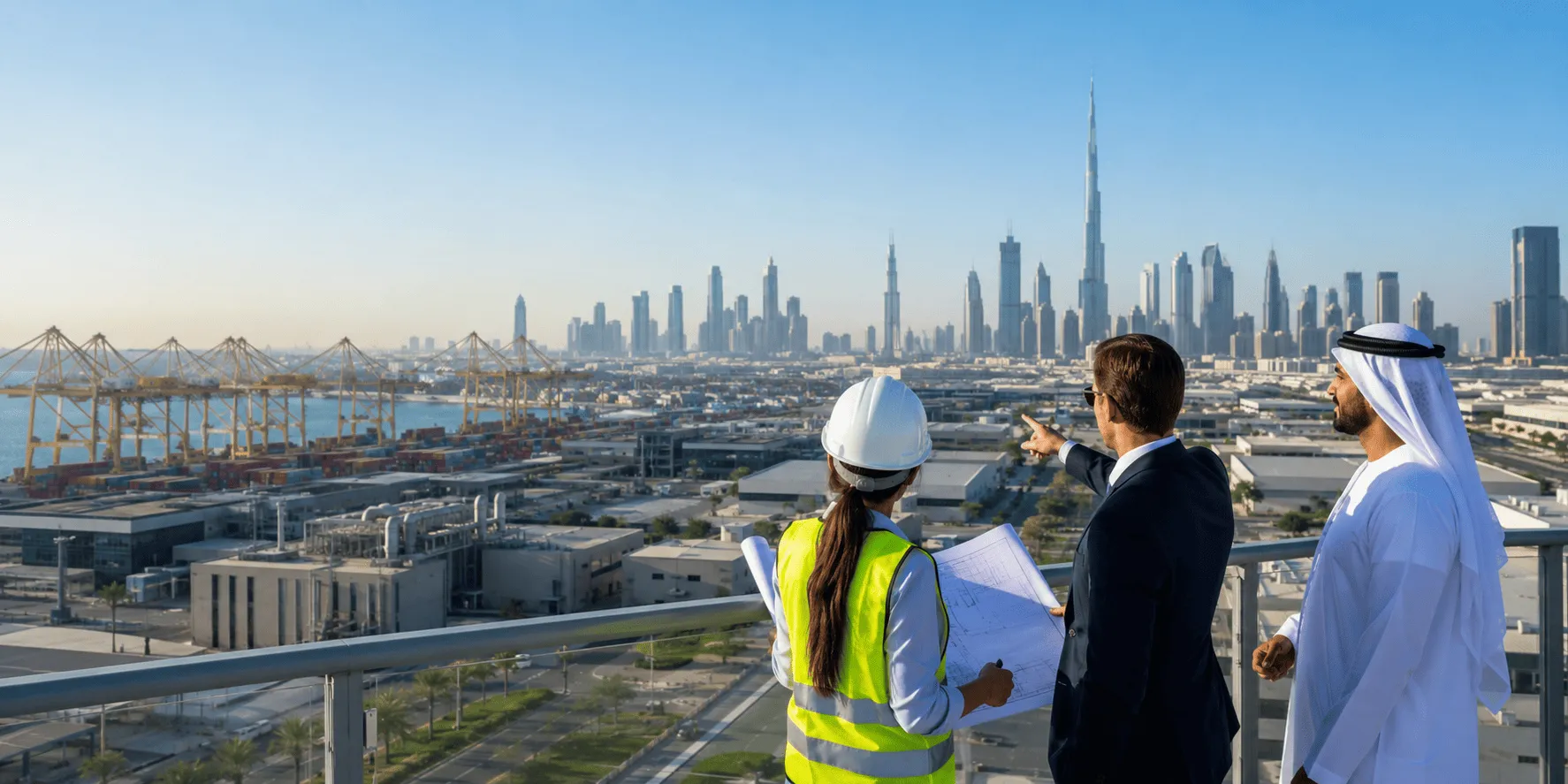




In recent years, Dubai has become much more than a tourism destination or a real estate market. It has grown into one of the most important investment hubs in the Middle East because several major sectors operate strongly side by side: real estate, energy, trade, technology, logistics, and infrastructure.
For investors looking for long-term growth, Dubai is not just a place to buy an asset. It is a platform where different industries connect and create broader economic opportunities.
Why Is Dubai Attractive to Investors?
One of Dubai’s main advantages is the combination of strong infrastructure and an international business environment. The city provides access to markets across the Middle East, Asia, Africa, and Europe, making it a strategic base for global companies.
Free zones, clearer business regulations, logistics facilities, active airports, and major ports have also made business setup and expansion in Dubai more attractive for serious investors.
Dubai is especially appealing to multi-sector investors because opportunities are not limited to one market. A holding company can operate across real estate, energy, trade, technology, and infrastructure while creating more value from the connection between these sectors.
Real Estate; One of the Main Entry Points for Investment
Dubai’s real estate market remains one of the most recognized investment paths in the city. Population growth, the presence of international companies, skilled migration, and the development of new districts have kept demand strong for buying, renting, and investing in property.
However, buying property in Dubai is not just about choosing an attractive project or a famous location. Investors need to review the property’s location, developer reputation, title type, payment plan, extra costs, rental potential, and liquidity.
For those who want to enter this market professionally, expert guidance is important. Services related to real estate investment in Dubai can help buyers make decisions based on budget, investment goals, expected returns, and actual market conditions.
Energy, Oil and Gas; A Key Part of the Regional Economy
Despite the growth of renewable energy, oil and gas still play a major role in the Middle East economy. Dubai’s commercial position, regional access, and transport infrastructure give it an important place for companies active in the energy sector.
Opportunities in this field are not limited to buying and selling petroleum products. Oil, gas, and energy projects require equipment supply, project management, engineering services, pipelines, logistics, and industrial maintenance.
This is where a holding structure becomes valuable. A holding company can connect capital, execution, supply, risk management, and market development within one broader business model.
Solar Energy and a New Investment Path
Dubai and the UAE have placed more attention on clean energy and reducing dependence on traditional resources in recent years. For commercial buildings, factories, warehouses, and large-scale projects, solar energy can help reduce electricity costs and improve energy management.
Investing in solar energy is not only an environmental decision. For many businesses, it is also an economic decision because it can reduce operating costs and increase the long-term value of a project.
The growth of construction and industrial projects in Dubai has increased demand for clean energy solutions. This creates a direct connection between real estate, industry, and solar energy.
Infrastructure and Technology; The Backbone of Industrial Growth
Dubai’s economic growth is not built only on towers and real estate projects. Behind this growth are power infrastructure, control systems, industrial automation, power equipment, and smart technologies.
Every large project, from factories and logistics centers to data centers and commercial complexes, needs stable power systems and reliable infrastructure. Without these foundations, large-scale industrial and commercial development is not possible.
That is why investment in infrastructure and industrial solutions is an important part of Dubai’s economic ecosystem. It is a sector that may receive less attention, but it is essential for long-term growth.
What Advantage Does a Holding Model Offer in Dubai?
Dubai is a market where different industries are closely connected. Real estate growth increases the need for energy and infrastructure. Energy development depends on equipment, logistics, and industrial services. Technology growth also needs stable power, capital, and a suitable business environment.
In this type of market, a holding model can be more effective than separate business activities. A holding company can distribute capital across different sectors, reduce risk, and create synergy between its subsidiaries.
For example, a large project in Dubai may require real estate investment, energy infrastructure, industrial equipment, and technology solutions at the same time. A holding company can manage these connected needs in a more coordinated way.
What Should Investors Consider Before Investing in Dubai?
- Investment goal; capital preservation, income generation, business expansion, or long-term growth
- Market conditions and demand in the chosen sector
- Ownership laws, company registration, permits, and tax considerations
- Execution, maintenance, logistics, and project management costs
- Credibility of the business partner, advisor, developer, or supplier
- Liquidity and regional or sector-specific risks
Dubai is more suitable for investors who enter the market with analysis, not only excitement or advertising. In this market, choosing the right sector and the right execution partner can make a major difference in investment results.
The Future of Investment in Dubai; An Opportunity for a Multi-Sector Approach
Dubai has become a multi-sector investment hub in the Middle East because it offers several key advantages at the same time: an active real estate market, strong infrastructure, strategic location, international business environment, growth in clean energy, and continuous demand for technology and industrial services.
For holding companies, Dubai is not just a single investment market. It is a platform for building a network of opportunities where real estate, energy, trade, technology, and infrastructure can grow together.
Successful investment in Dubai is not only about choosing an attractive sector. It depends more on having a structured approach, understanding the risks, and using the connections between industries effectively.
Frequently Asked Questions
Why is Dubai suitable for multi-sector investment?
Because several major markets such as real estate, energy, trade, technology, logistics, and infrastructure are active at the same time. This diversity helps investors avoid depending on only one industry.
Is real estate still one of the best investment paths in Dubai?
Real estate remains one of Dubai’s important investment paths. However, property selection should be based on location, developer credibility, payment plan, costs, rental potential, and liquidity.
How does a holding model support investment in Dubai?
A holding model helps distribute capital across different sectors and reduce dependence on a single industry. It can also create connections between real estate, energy, technology, and industrial services.
What are the risks of investing in Dubai?
Choosing the wrong project, market fluctuations, execution costs, high competition, regional changes, and working without a reliable advisor are among the main risks of investing in Dubai.
What should investors do before starting in Dubai?
The first step is to define the investment goal. After that, investors should review the market, regulations, budget, risks, and the right advisor or execution partner.