



Solar energy is no longer only an environmental choice. For many companies, factories, logistics centers, warehouses, and commercial buildings, it has become an economic solution for reducing electricity costs and managing energy consumption more effectively.
In markets such as the UAE, where energy consumption is high in industrial and commercial projects, using solar energy solutions for businesses can help control part of the operating costs and increase the long-term value of a project.
Why Has Solar Energy Become Important for Businesses?
Energy cost is one of the major fixed expenses for many businesses. Any company with high electricity consumption will eventually look for a way to control this cost.
Solar energy can be useful for:
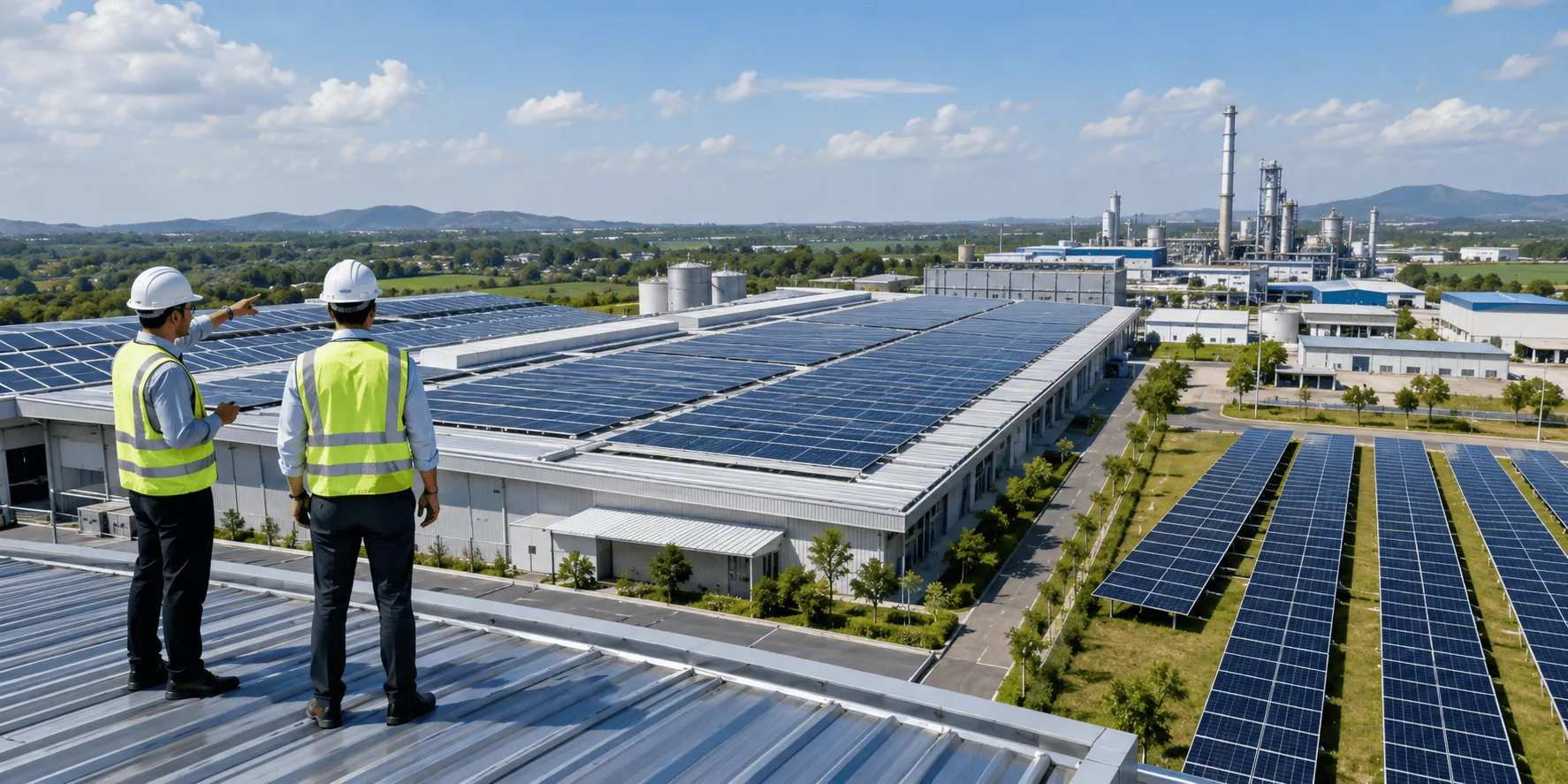
- Factories and manufacturing units
- Warehouses and logistics centers
- Office and commercial buildings
- Shopping centers and large retail stores
- Cold storage facilities
- Parking areas and open spaces suitable for solar panel installation
If these projects are designed correctly, they can supply part of the electricity demand and reduce dependence on the grid.
Solar Investment Is Not Just About Buying Panels
Many businesses think a solar project simply means buying a few panels and installing them on a roof. In reality, a commercial solar project must be designed based on both technical and financial analysis.
Before implementation, several questions need to be answered:
- How much electricity does the facility consume?
- Is there a suitable roof or land area for installation?
- What system capacity makes sense?
- Is direct investment or a PPA model more suitable?
- What is the expected payback period?
- How will maintenance and monitoring be managed?
Without this assessment, the system may be installed but fail to deliver the expected performance.
Solar Project Models for Companies
Companies usually enter solar projects through two main models: direct investment or PPA.
In direct investment, the business pays for the project and owns the system. This model is suitable for companies with enough budget that want to benefit from long-term energy cost reduction.
In a PPA model, the investor or solar provider usually covers the project cost, and the business purchases the generated electricity under a contract. This model is suitable for companies that want to use solar energy without heavy upfront investment.
The right choice depends on the company’s budget, consumption pattern, financial goals, and long-term plan.
Which Projects Are More Suitable for Solar Energy?
Not all projects are equally suitable for solar energy. Facilities with regular electricity consumption, enough installation space, and a long-term operational plan are usually better candidates.
More suitable projects usually have:
- High and predictable electricity consumption
- Large roofs or usable open spaces
- Continuous daytime electricity demand
- Long-term plans to operate at the same location
- A goal to reduce operating costs
- Attention to sustainability and ESG standards
For example, a large warehouse or a factory with high daytime electricity demand can benefit more from a solar system.
The Role of Solar Energy in Reducing Operating Costs
One of the main reasons companies invest in solar energy is to reduce operating costs. When part of the electricity demand is supplied through solar panels, dependence on grid electricity decreases.
This is especially important for businesses with stable and significant energy consumption. Reducing electricity costs can affect profitability, production costs, and financial planning over the long term.
The actual savings depend on system capacity, consumption pattern, installation conditions, equipment quality, and contract model. That is why accurate calculation before implementation is essential.
The Importance of Maintenance and Monitoring
Installing a solar system is not the final step. To keep the system performing properly over time, regular maintenance and monitoring are necessary.
Issues such as dust, equipment performance drop, inverter failure, shading, or cable problems can reduce system output.
In commercial projects, monitoring is even more important because lower power generation can directly affect financial savings. For this reason, O&M should be planned from the beginning of the project.
Solar Energy and Brand Value
Using solar energy is not only a financial decision. Many companies use it to strengthen their brand image and show commitment to sustainability.
In international markets, energy consumption, emission reduction, and the use of clean resources matter to many clients, partners, and investors.
For companies working with global markets, a solar project can become part of a responsible and sustainable brand identity.
The Future of Solar Investment for Businesses
With rising energy costs, the growth of commercial and industrial projects, and stronger focus on sustainability, solar energy is becoming more important in investment decisions.
For companies, this sector creates real value when it is assessed from both technical and financial perspectives. Choosing the right capacity, financial model, reliable equipment, and maintenance plan has a major impact on project success.
Solar energy for businesses is not just a technology. It is a tool for cost management, efficiency improvement, and preparation for the future of energy.
Frequently Asked Questions
Is solar energy suitable for every business?
No. Suitability depends on electricity consumption, installation space, budget, business model, and financial goals.
What does PPA mean in a solar project?
In a PPA model, the business usually does not pay the full project cost upfront. Instead, it purchases the electricity generated by the solar system under a contract.
Which businesses benefit the most from solar energy?
Factories, warehouses, logistics centers, commercial buildings, cold storage facilities, and companies with high daytime electricity consumption are usually better candidates.
How important is solar panel maintenance?
Maintenance is very important. Dust, equipment failure, or system performance drop can reduce electricity generation and affect the financial return of the project.
What are the main benefits of solar investment for companies?
Lower electricity costs, better energy management, higher long-term project value, reduced dependence on the grid, and a stronger sustainable brand image are among the main benefits.