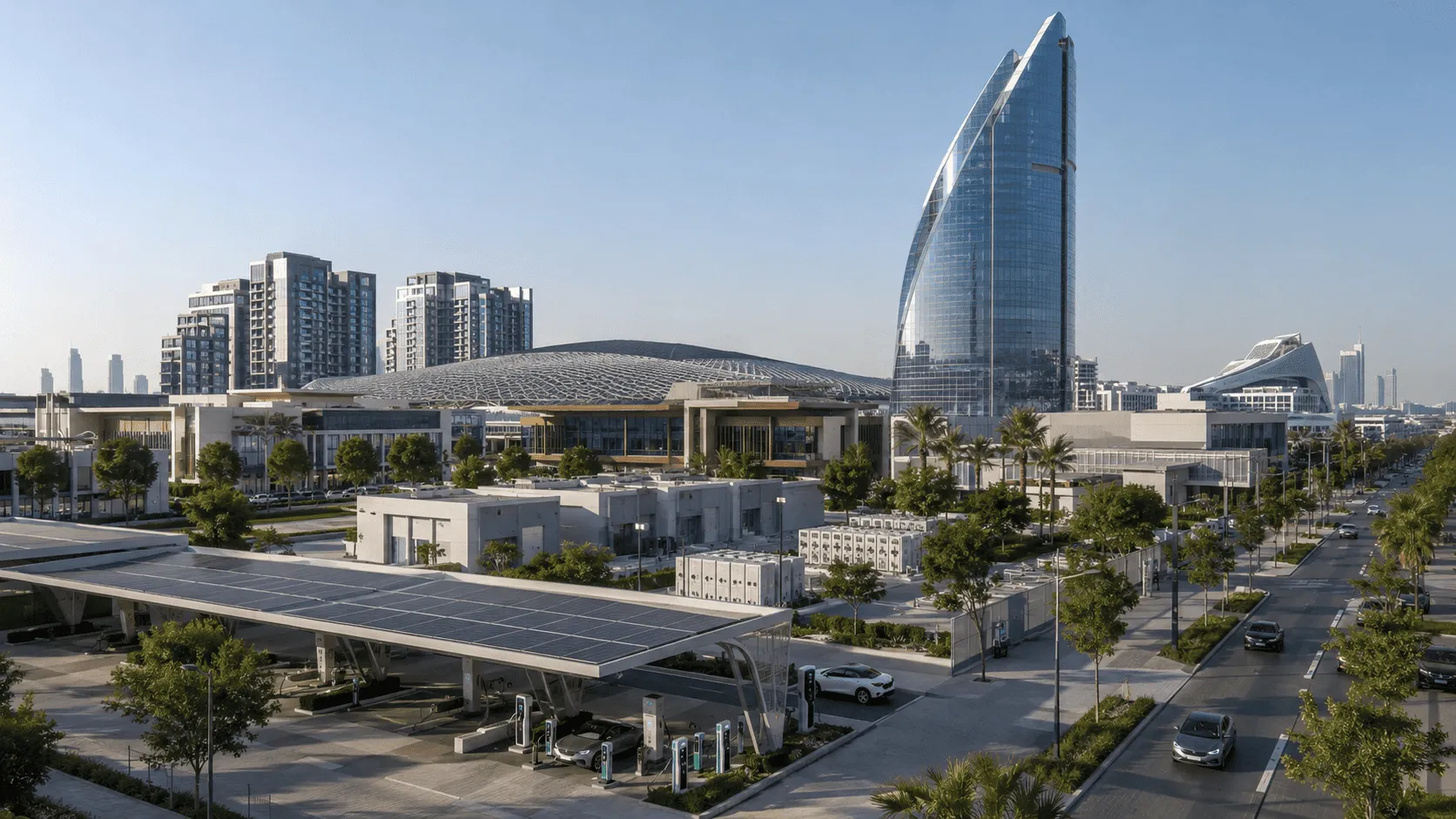




In a modern holding model, companies do not grow separately from each other. Real value is created when connected sectors, such as real estate, energy, and technology, move in a coordinated direction.
For example, a large project in Dubai is not limited to buying land or developing property. It may also need sustainable energy, power infrastructure, smart systems, consumption management, and industrial services. This is where a holding company can connect different companies and areas of expertise.
Why Is Synergy Important for Holding Companies?
Holding companies usually operate in several industries. If each subsidiary works separately with no connection to the others, part of the growth potential is lost.
Synergy means that subsidiaries can support each other through shared projects, markets, and resources. This can reduce costs, speed up execution, and improve the use of investment opportunities.
In a multi-sector holding company, synergy can be created between:
- Real estate investment and development
- Solar energy and power consumption management
- Power infrastructure and industrial equipment
- Technology, automation, and control systems
- Equipment supply and project execution
- Risk management and market development
Real Estate; The Starting Point for Many Investment Projects
Real estate in Dubai is not just a standalone asset. A property project can be directly connected to several other industries, from energy and infrastructure to technology and asset management.
In large projects, property selection or development must be reviewed more carefully. Location, investment model, surrounding infrastructure, energy consumption, operational potential, and long-term value should all be considered.
This is why services related to real estate development in Dubai can become an important starting point for investors who want to go beyond simple property purchase and focus on long-term asset value.
Solar Energy; Reducing Costs and Increasing Project Value
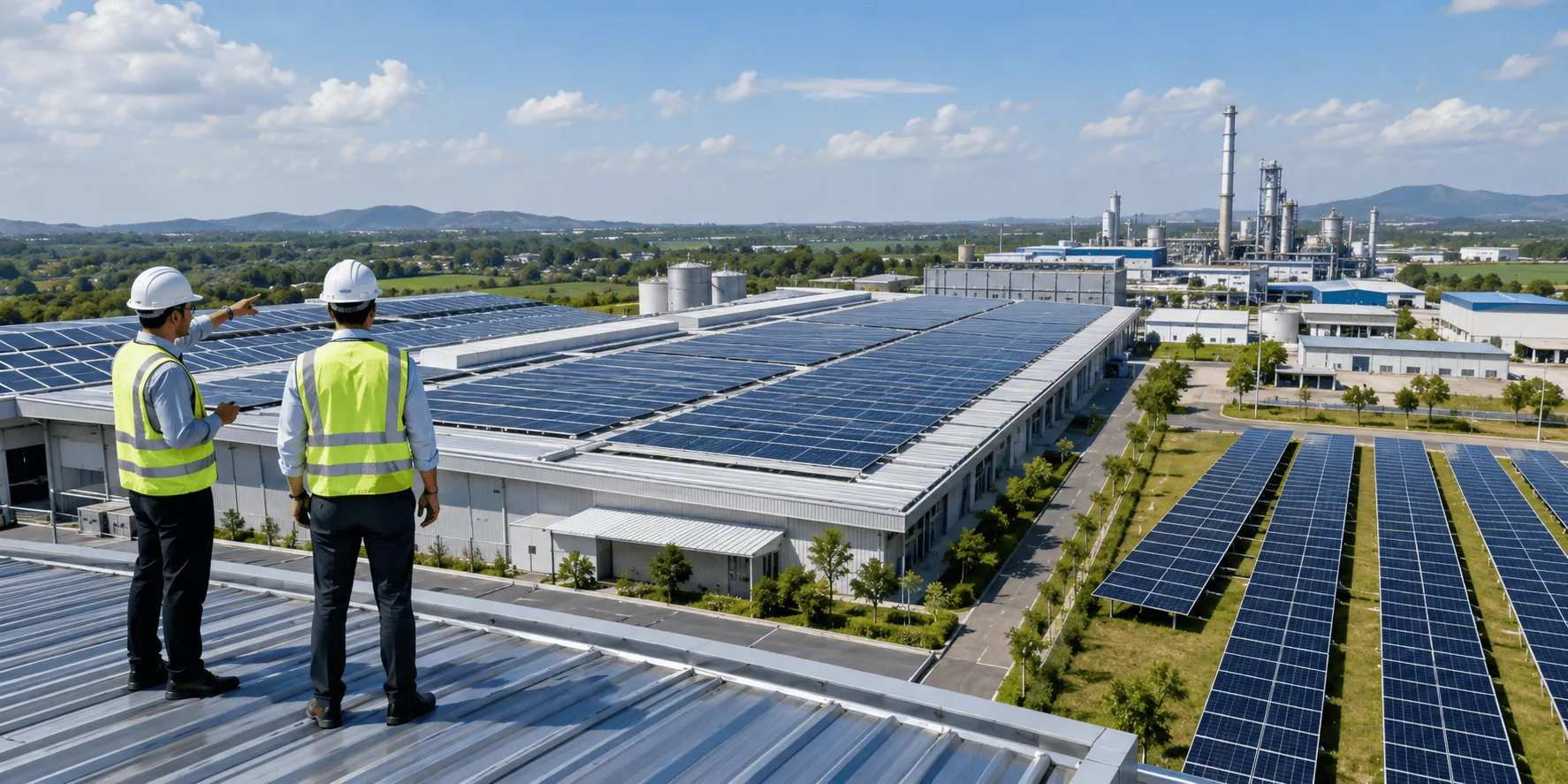
As a commercial, industrial, or real estate project grows, energy consumption also increases. In this situation, solar energy can help control part of the operating costs and make the project more economically sustainable.
For commercial buildings, warehouses, factories, and large facilities, using commercial solar projects can help reduce dependence on grid electricity and improve energy management.
This is not only an environmental decision. In many projects, solar energy can affect operating costs, brand value, and long-term returns.
Technology and Automation; Better Control for Large Projects
Large projects cannot be managed properly without control systems and technology. The larger the project, the greater the need for monitoring, control, automation, and data management.
In industrial and infrastructure sectors, automation and industrial solutions can help control energy consumption, reduce human error, improve safety, and manage equipment more effectively.
Technology in a holding model is not just an additional tool. It can make decision-making more accurate, operations more stable, and maintenance costs easier to control.
How Real Estate, Energy, and Technology Connect in a Real Project
Consider a large commercial project. At first, it may look like only a real estate investment. In practice, however, its success depends on several connected areas.
Such a project may need:
- A suitable location and investment model
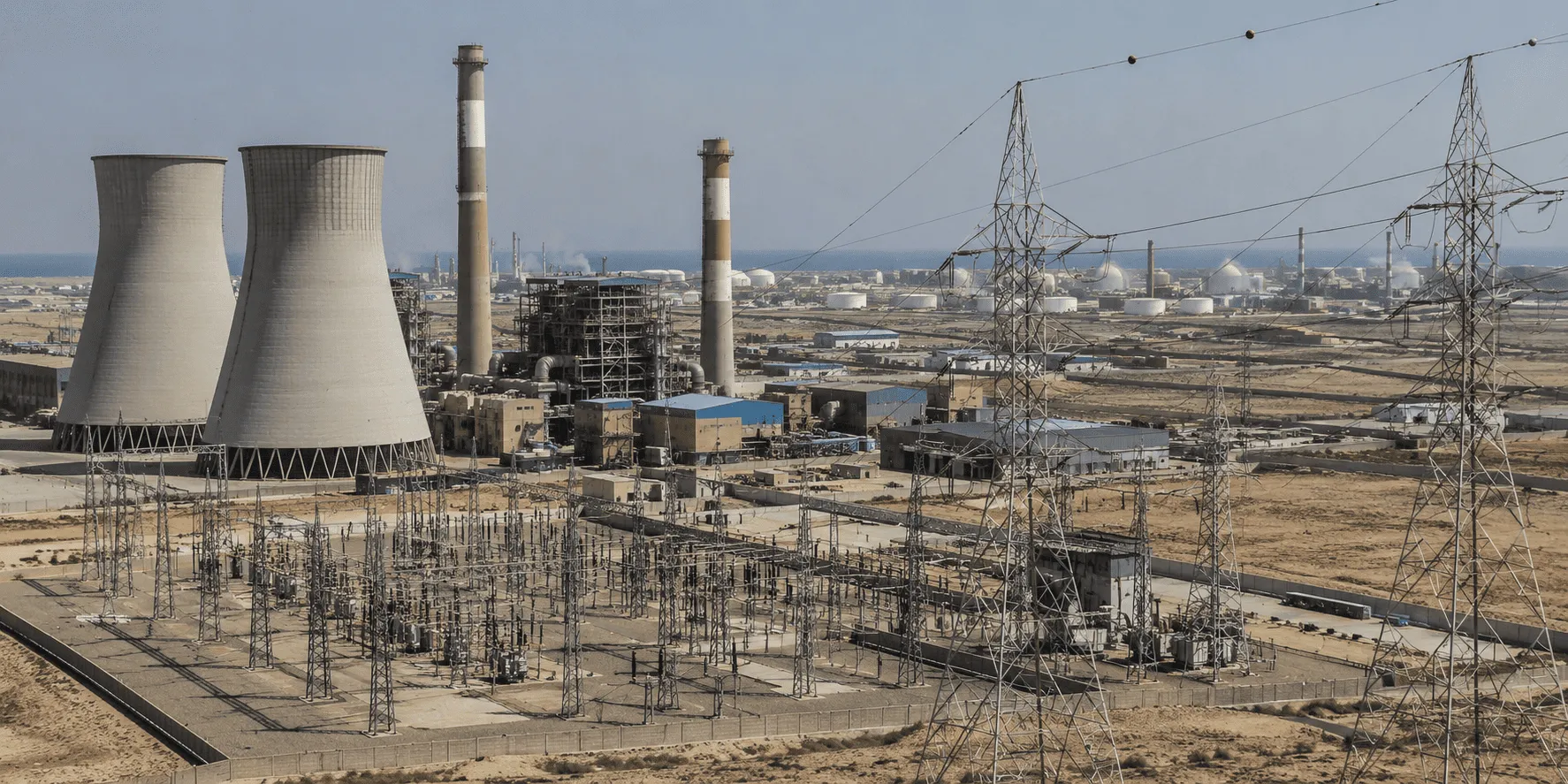
- Stable power infrastructure
- Solar energy to reduce costs
- Control and monitoring systems
- Energy consumption management
- Equipment and infrastructure maintenance
- Long-term operation planning
If these parts are managed separately, costs and risks can increase. In a holding model, however, there is more room for coordination between these needs.
The Advantage of a Holding Model in Multi-Sector Projects
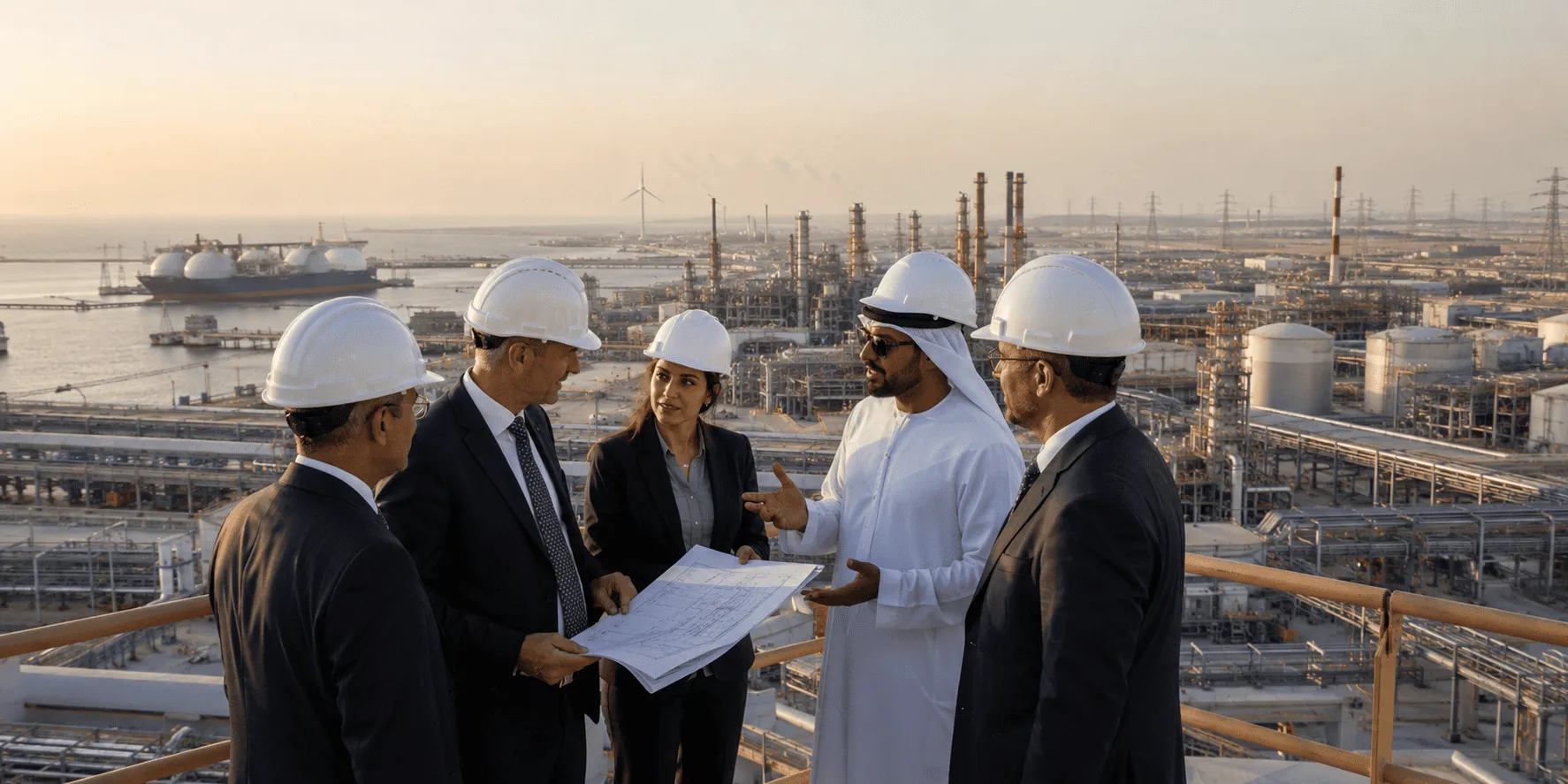
The main advantage of a holding company is that it does not look at only one part of a project. It can consider capital, execution, infrastructure, energy, and technology together.
This multi-sector view has several benefits:
- Better decisions during the investment stage
- Less repeated work and lower execution costs
- Shared use of subsidiary expertise
- Better project risk management
- Higher long-term asset value
- Project development with an operational view, not only a financial one
In markets such as Dubai and the UAE, this model becomes even more important because projects are usually large, competitive, and connected to several specialized sectors.
When Does Synergy Create Real Value?
Synergy is useful only when it is real and practical. Simply placing several companies under one brand does not create value by itself.
For synergy to work, several conditions are needed:
- Subsidiaries must complement each other
- Projects must require several areas of expertise
- Central management must be able to create coordination
- Decisions must be backed by real execution, not only branding
- Each company must have a clear role in the value chain
When these conditions exist, a holding company can manage projects that may be harder or riskier for a single company to handle alone.
The Future of Multi-Sector Holding Companies in the Region
In the Middle East, large projects are moving toward a combination of several sectors. Real estate is not complete without stable energy. Energy needs reliable infrastructure and equipment. Technology also has limited operational value without real projects.
Holding companies that can connect these areas have a stronger chance of sustainable growth. The future model is not only about investing in one industry; it is about building connections between assets, energy, infrastructure, and technology.
In this model, real estate, energy, and technology each have value on their own. But when they work together in a coordinated structure, they can create greater value for both the project and the investor.
Frequently Asked Questions
What does synergy mean in a holding model?
It means subsidiaries do not work completely separately. Instead, they support each other through shared projects, resources, markets, and expertise to create more value.
Why are real estate, energy, and technology connected?
Because large real estate and industrial projects need stable power, energy management, control systems, technology, and reliable infrastructure.
What advantage does a holding model offer for large projects?
A holding model can coordinate capital, execution, infrastructure, energy, and technology more effectively and reduce project risk.
Is synergy useful only for large companies?
It creates the most value in multi-sector companies and large projects, but the principle can be useful for any organization with complementary services or expertise.
When does synergy fail in a holding company?
It fails when subsidiaries have no real connection, each company’s role is unclear, or coordination remains only at the branding level.