



An industrial project may appear profitable, hold initial approvals and operate in a promising market. However, hidden liabilities, outdated equipment, land restrictions, weak contracts or unexpected capital requirements can completely change the outcome of the investment.
For this reason, investors should conduct thorough due diligence before acquiring a factory, investing in an industrial project or entering into a partnership with a company in the UAE.
At Aras Holding, industrial investment opportunities are not assessed solely on headline figures. Market conditions, legal structure, technical capability, financial performance, execution risks and the project’s development potential must be evaluated together.
What Is Industrial Investment Due Diligence?
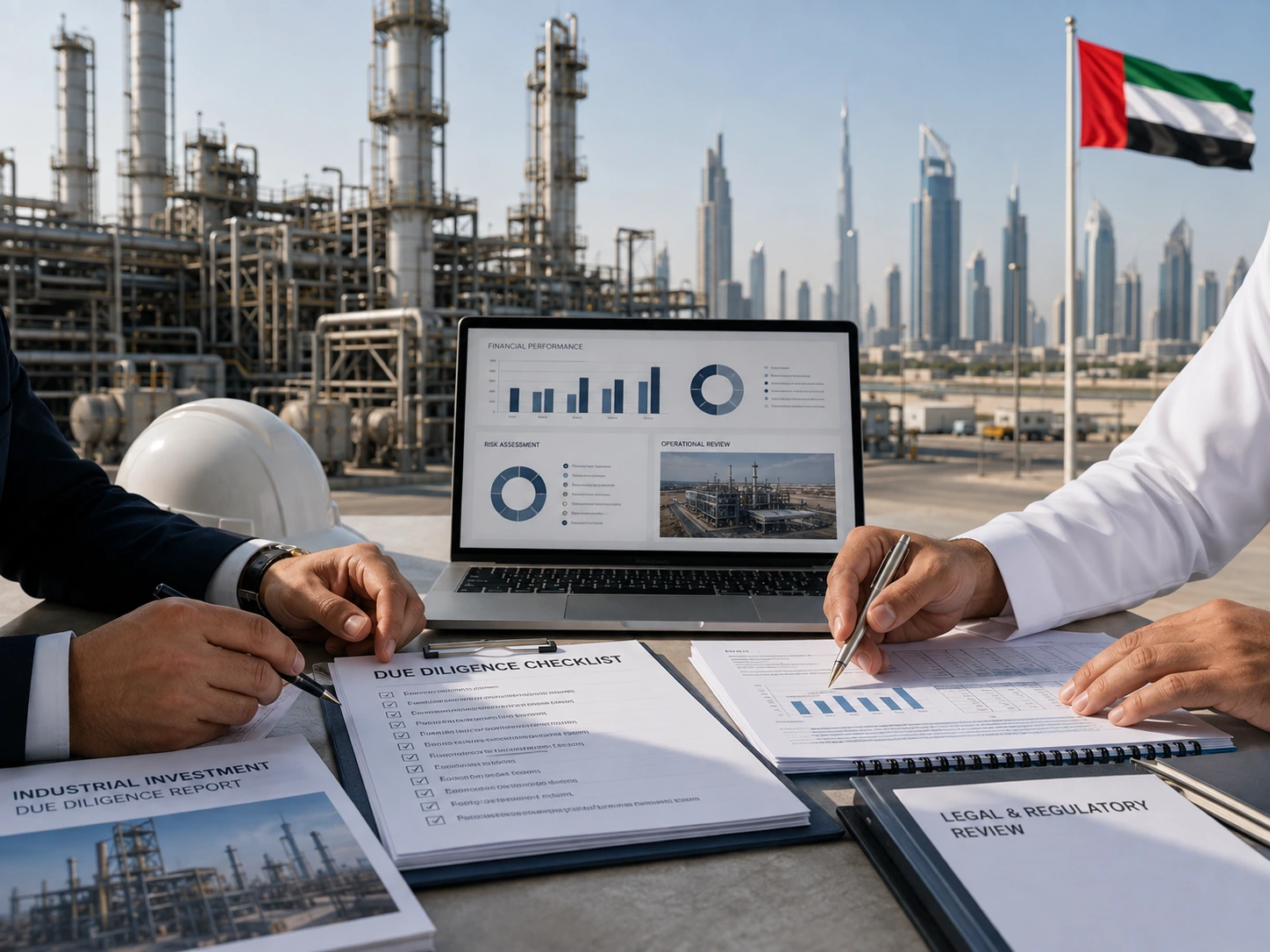
Due diligence is a structured process used to verify project information and identify risks that may affect the value, cost or feasibility of an investment.
The findings should help the investor decide:
- Whether to proceed with the investment
- What valuation or purchase price is reasonable
- Which conditions should be included in the agreement
- Which risks must be resolved before closing
- How much additional capital may be required after the investment
In an industrial transaction, reviewing the financial statements alone is not enough. Equipment condition, actual production capacity, energy supply, licenses, land rights, supply chains and customer demand must also be examined.
When Is Due Diligence Required?
Industrial due diligence is commonly conducted before:
- Acquiring a company or factory
- Purchasing a stake in an industrial project
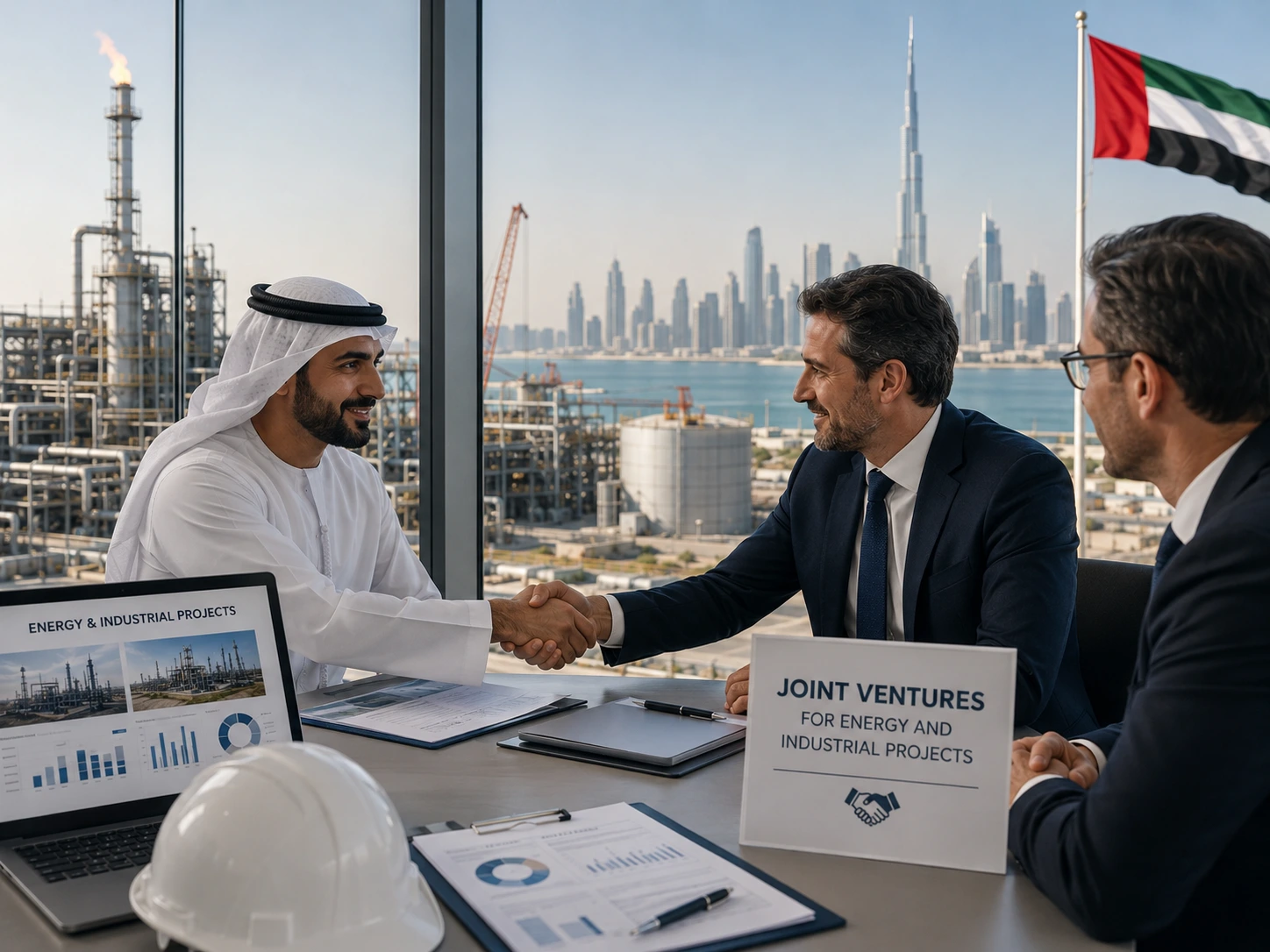
- Entering into a joint venture
- Financing an industrial development
- Acquiring an operating production facility
- Expanding or modernizing an existing plant
- Transferring technology or purchasing major equipment
- Investing in a mainland or free zone industrial project
The larger the project and the more complex its contractual structure, the broader the due diligence process should be.
Which Areas Should Be Reviewed?
| Area of review | Main question |
| Legal structure and ownership | Who legally owns the company, shares, land and assets? |
| Market and sales | Who buys the product and at what margin? |
| Technical and operational | What is the true condition and capacity of the facility? |
| Financial and tax | What are the real earnings, liabilities and funding requirements? |
| Licensing and environmental | Does the project hold all required approvals? |
| Contracts and supply | How reliable are the raw material, utility and sales arrangements? |
| Management and execution | Can the current team operate and develop the project effectively? |
These areas should be assessed together. Strength in one area does not offset a serious weakness in another.
Reviewing the Legal Structure and Ownership
The first step is to verify the company’s legal identity and confirm ownership of its assets.
Important areas include:
- Validity of commercial and industrial licenses
- Shareholders and ultimate beneficial owners
- Articles of association and management authority
- Land ownership, lease terms or usage rights
- Ownership of machinery and equipment
- Legal disputes and contractual obligations
- Restrictions on share transfers or changes of control
- Registered pledges, guarantees and security interests
For manufacturing businesses, the industrial license should accurately reflect the activity, factory location and products being manufactured.
In share acquisitions and corporate combinations, investors should also determine whether additional legal or regulatory approvals are required.
Reviewing the Market and Revenue Model
The existence of a factory does not guarantee sustainable demand.
The commercial review should answer:
- Who are the main customers?
- How large is the real addressable market?
- Is revenue dependent on a small number of customers?
- What advantages do local and imported competitors have?
- How are selling prices determined?
- Does the product require specific standards or approvals?
- Is production capacity aligned with realistic market demand?
- What are the transportation and distribution costs?
If a large percentage of revenue depends on one customer, losing that contract could undermine the entire financial model.
Sales forecasts should be tested against existing contracts, confirmed orders, customer purchase history and competitive conditions, rather than relying only on management projections.
Assessing the Factory and Its Equipment
The value of an industrial asset cannot be determined from the original purchase price of its machinery alone.
The technical team should assess:
- Age and condition of equipment
- Nameplate and actual production capacity
- Production downtime
- Maintenance records
- Availability of spare parts
- Electricity, water and fuel consumption
- Product quality and waste rates
- Required refurbishment or replacement
- Potential for future capacity expansion
A facility may show strong capacity on paper but operate far below that level because of equipment failures, raw material shortages or utility limitations.
Post-acquisition capital expenditure should also be calculated. A factory may have an attractive purchase price but still require significant investment in equipment upgrades, safety improvements and infrastructure development.
Financial and Tax Due Diligence
The financial review should not be limited to the reported profit shown in the accounts.
Key areas include:
- Quality and reliability of revenue
- Profit margin by product
- Bank and trade debt
- Doubtful receivables
- Inventory condition and valuation
- Working capital requirements
- Cash flow
- Deferred maintenance costs
- Employee-related liabilities
- Capital needed for future growth
The company’s corporate tax, value-added tax and potential outstanding liabilities should also be reviewed.
Operating in a free zone does not automatically guarantee tax benefits. The company’s activity, income sources and legal position must be examined separately.
Industrial Licenses and Environmental Requirements
Required approvals depend on the type of activity, project location and the emirate in which the facility operates.
In addition to an economic license, an industrial project may require:
- Industrial production approval
- Registration with the relevant industrial authority
- Land-use approval
- Construction and operating permits
- Product approvals
- Health and safety clearances
- Environmental impact assessments
- Wastewater discharge or emissions permits
Holding a basic company license does not necessarily mean the facility is ready to operate.
When acquiring an operating factory, the investor should verify the validity of all permits, review any previous violations and estimate the cost of required corrective work.
Reviewing Contracts and the Supply Chain
Many industrial projects depend on a limited number of critical contracts, including:
- Raw material supply
- Electricity, gas or water supply
- Product sales
- Land or warehouse leases
- Transportation and logistics
- Maintenance services
- Technology and spare parts
- EPC and construction contracts
Each agreement should be reviewed for duration, pricing, guarantees, termination rights and allocation of responsibility.
For example, a factory may hold a long-term sales agreement, but its pricing mechanism may not cover increases in raw material costs. In that situation, higher sales volumes will not necessarily improve profitability.
Dependence on a single supplier or import route should also be identified. Alternative suppliers, delivery times and safety stock levels are important factors in maintaining production continuity.
Assessing Management and Execution Capability
Even a strong industrial opportunity can suffer from delays and cost overruns if the execution team is not capable.
The management review should establish:
- Who makes the key decisions?
- Does the management team have experience in the same industry?
- Is technical knowledge embedded in the company or concentrated in a few individuals?
- Are reporting and cost-control systems in place?
- How are production and maintenance managed?
- Is there a succession plan for key personnel?
- Are the roles of the investor and operating partner clearly defined?
In a joint venture, decision-making powers should be agreed from the beginning. Unclear voting rights, additional funding obligations, profit distribution or management appointments can later lead to serious disputes.
Key Warning Signs
A single warning sign does not always justify rejecting the investment, but it should trigger further investigation.
Important red flags include:
- A gap between reported and actual production capacity
- Missing equipment ownership records
- Expired or unsuitable licenses
- Heavy dependence on one customer
- Unrecorded liabilities
- Significant deferred maintenance
- No reliable raw material supply agreement
- Weak cash flow despite reported accounting profit
- Material legal disputes
- No defined exit route for the investor
- Sales forecasts without supporting evidence
These risks should be reflected in the valuation, contract terms and corrective action plan.
Practical Steps in Industrial Due Diligence
1. Define the Investment Objective
Clarify whether the transaction involves a share purchase, asset acquisition, partnership or project financing.
2. Collect the Initial Documents
Obtain licenses, contracts, financial reports, production data and technical records.
3. Conduct a Site Visit
Inspect the land, machinery, warehouse, production lines and supporting infrastructure.
4. Analyse the Market and Financial Model
Evaluate revenue, costs, working capital and different operating scenarios.
5. Record and Prioritize Risks
Rank each risk based on its likelihood, financial impact and the ability to control it.
6. Make the Investment Decision
The due diligence process should lead to one of the following outcomes:
- Proceed with the investment
- Renegotiate the price
- Add contractual protections
- Request guarantees
- Require corrective action before closing
- Withdraw from the transaction
A useful due diligence report does more than list problems. It explains how each issue affects value and the final investment decision.
Evaluating Industrial Opportunities with Aras Holding
At Aras Holding, industrial investments are assessed from several perspectives, including market potential, capital structure, engineering, execution, supply chains and risk management.
Our specialized activities across investment, engineering consulting, energy, trading, construction and infrastructure allow industrial opportunities to be evaluated as an integrated business rather than as a standalone asset.
Assess an Industrial Investment Opportunity in the UAE
Before investing in a factory or industrial project, it is essential to understand the asset’s real value, additional capital requirements and most significant risks.
Contact Aras Holding to discuss industrial investment opportunities and potential cooperation across manufacturing, energy and infrastructure projects in the UAE.
Frequently Asked Questions
Why is due diligence important before acquiring a factory?
It can reveal liabilities, licensing problems, outdated equipment and capital requirements that were not reflected in the initial transaction value.
Is an audited financial report enough?
No. Financial reports do not fully explain the condition of the equipment, customer demand, licenses, land rights or supply contracts.
What is the difference between a share acquisition and an asset acquisition?
In a share acquisition, the investor acquires an interest in the existing company together with its obligations. In an asset acquisition, specific property, machinery or other assets are purchased. The legal and tax implications of each structure should be assessed separately.
What is the most important part of industrial due diligence?
No single factor is sufficient. Market demand, licenses, equipment, raw material supply and financial performance must all be reliable.
When should an investor walk away from an industrial opportunity?
An investor should reconsider the transaction when major risks cannot be measured or controlled, critical information is withheld or the cost of correcting the project eliminates its economic value.